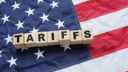
The Trump administration has launched its system for processing refunds for the tariffs it was found to have imposed illegally last year.
The Consolidated Administration and Processing of Entries (CAPE) system was announced last week and went live yesterday (20 April).
Elsewhere, new Hungarian leadership could pave the way for greater EU support for Ukraine and also be a key factor in any future decision by the bloc to curb trade with Israel.
CAPE goes live
The US Customs and Border Protection (CBP) agency yesterday launched the CAPE system for processing refunds for the tariffs that President Trump was found by the Supreme Court to have imposed illegally last year.
Trump’s so-called ‘reciprocal’ tariffs, introduced on ‘Liberation Day’ in April 2025, were introduced under the International Emergency Economic Powers Act (IEEPA). However, in February this year, the Supreme Court found that this was an excessive use of the legislation by the executive branch of US power.
CBP has launched CAPE to process businesses’ requests for refunds of these illegally imposed IEEPA tariffs. According to the BBC, 56,000 importers began the refund process in early April, with claims worth US$127bn made when the portal opened.
A CBP spokesperson said CAPE will “efficiently process refunds” and will do so by repaying importers with one lump sum for their requests, rather than item-by-item. It says successful applicants should expect payment within 60 to 90 days, including any applicable interest.
The process is being unrolled in phases, with CAPE initially able to process refund requests for recent imports and straightforward entries. It cannot yet process claims for imports tied up in “legal disputes, anti-dumping investigations or other unresolved customs processes,” the Guardian reports.
Mixed response
Businesses are so far cautious about the efficiency of the system however, with the BBC reporting that some have encountered glitches.
"I guess I'll hold my breath until I actually see the money deposited into my bank account," said Alfred Mai of ASM Games to NPR. Mai was able to upload relevant data to CAPE within five minutes, including refund claims for 17 shipments which attracted tariffs worth more than US$162,000.
The Guardian also notes that only the companies that officially faced the tariffs are eligible to claim, meaning many retailers and consumers will still have lost out due to the hiked duties that were passed onto them by importers.
FedEx has said it will pass refunds back to consumers while Costco has said it could lower prices if it gets money back.
Middle East latest
With the US/Israel-Iran ceasefire deadline approaching tomorrow, Trump continues to put pressure on Iran to agree a deal “relatively quickly”. In the UK, prime minister Sir Keir Starmer is chairing a meeting of the new Middle East Committee this afternoon, as he looks to mitigate the economic fallout of the conflict.
His government is set to increase taxes on wind and solar farms as part of this effort, according to the FT, in a bid to pressure them into using fixed-price contracts to cut the link between electricity and gas prices in the country. While the impact of the blockade of the Strait of Hormuz is largely unavoidable for gas prices, electricity in the UK is increasingly generated by renewables.
The government is less engaged with Canadian prime minister Mark Carney’s idea of a new Defence, Security and Resilience Bank (DSRB). Negotiations began in Montreal yesterday on establishing the new multilateral rearmament bank, but the UK is only sending an attaché to observe the talks, rather than a minister, sources have told Politico.
The decision to not more proactively engage with the DSRB talks comes amid continued scrutiny over the UK having not yet announced its much-awaited defence spending plans.
The UK has also not yet come to an agreement with the EU on terms for joining the €150bn Security Action for Europe (Safe) defence procurement programme.
Magyar paves way for EU loan for Ukraine
Following his defeat in the Hungarian election to Péter Magyar, Viktor Orbán has said he will drop his country’s veto to the EU’s proposed €90bn loan to Ukraine ahead of a key vote of EU ambassadors on Wednesday, provided that Russian oil resumes transit into Hungary via the Druzhba pipeline.
Ukrainian President Volodymyr Zelenskyy has said the pipeline should be operational by the end of this month, but diplomats told Politico that they are optimistic that flows could resume before tomorrow’s meeting of the Council of the EU, where the vote on the loan will take place.
Magyar’s victory could also shift the EU stance regarding Israel, with a set of sanctions on Israeli settlers in the West Bank, previously vetoed by Hungary, now more likely to get full consent among member states.
European Commission vice-president Kaja Kallas told reporters yesterday:
“This country had the elections and will have a new government. I will not speak for the new government, but definitely I think we can look into all these policies and see whether they have a new approach.
“Settler crimes need to be punished.”
She was speaking after Spanish prime minister Pedro Sánchez called for the bloc to suspend its association agreement with Israel.
UK stats on Israel export licences
Beyond the EU, the UK government published its latest statistics on how many licences are currently extant for the exports of controlled non-military and military goods to Israel.
As of 28 February 2026, there were 395 extant export licences, including 203 military licences, with 168 further applications being processed. The bulk (339) of the extant authorisations are standard individual export licences (SIELs).
The government suspended 30 export licences to Israel in 2024 due to concerns over the country’s non-compliance with international humanitarian law during its conflict with Palestine.
Also in the trade news
· A Notice to Exporters from the government confirmed that the “Office of Trade Sanctions Implementation (OTSI) will become responsible for licensing sanctioned goods and associated ancillary services for export” from 27 April
· Japan is lifting its ban on the export of lethal weaponry in a break with the pacifist stance it has adopted since WWII, the FT reports
· German Chancellor Friedrich Merz is seeking closer ties with Brazil following a meeting with his counterpart Luiz Inácio Lula da Silva on Monday, Politico reports. This is partly in response to growing scepticism over US allyship
Yesterday in trade
· The US seized an Iranian cargo vessel for attempting to breach its blockade of the Strait of Hormuz
· The UK was pushing for deals with the EU on electric vehicles and steel
· Figures published in Politico showed that low value goods imported via the ‘de minimis’ scheme into the UK had double in the last three years
You can read yesterday’s trade news here.


