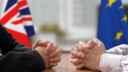
Sir Keir Starmer finally confirmed the date for this year’s UK-EU leaders’ summit yesterday, as European parliamentarians also voted to approve the EU’s tariff deal with the US.
G7 leaders, including US President Donald Trump, also presented a united front in their support for Ukraine.
UK-EU leaders’ summit
Despite European concerns over the uncertainty around his position, prime minister Starmer was yesterday able to confirm that this year’s UK-EU leaders’ summit will be taking place on 22 July.
Following a meeting with European Commission President Ursula von der Leyen, he posted on X:
“My Labour government is delivering on our promise to reset our relationship and put Britain at the heart of Europe. Together we will tackle the cost of living, boost jobs and create opportunities for young people.”
Last year’s summit saw the two parties commit to negotiating a Common Sanitary and Phytosanitary (SPS) Area to reduce checks on agrifood products, a linkage of Emissions Trading Schemes (ETS) and an enhancement of youth mobility.
The Chartered Institute of Export & International Trade’s customs practice director, Anna Doherty, welcomed the news that another summit will be held this year, saying that she looked forward to seeing more details about these pledges.
“As ever with trade, the detail matters. While we’ve heard about progress in the SPS negotiations and we know the implementation is due mid-2027, we’re still awaiting information about how this agreement will work in practice, including any transitional arrangements.
“There’s been less detail about the ETS linkage, which is becoming increasingly important due to its role in UK and EU exemptions from each other’s Carbon Border Adjustment Mechanisms (CBAM). While the EU CBAM is already operational, the UK’s CBAM is set to enter force from the start of next year, adding pressure to supply chains.”
You can read her full response here.
There is uncertainty about whether the July summit will yield tangible outcomes on last year’s pledges, with the two sides thought to be a distance apart on the issue of tuition fees for European students at British universities. However, an EU source told the FT that “once you set a date, it’s a firm deadline for deliverables”.
EU diplomats are also thought to be wondering if Brussels could get a better deal with the UK should Starmer be replaced as prime minister by Andy Burnham – the Greater Manchester mayor who is competing to return to Westminster at this week’s Makerfield by-election.
The announcement of the summit also comes amid pressure from the Lib Dems for Labour to drop its “torpor and timidity”, and negotiate rejoining the EU single market, as per reporting in the Guardian.
MEPs approve Trump tariff deal
European parliamentarians have voted to approve the EU’s tariff reduction deal with the US.
Signed by von der Leyen and Trump at Turnberry golf course in Scotland last year, the deal will see EU tariffs removed on various US goods, with US duties cut to 15% on European goods heading the other way.
Trump had threatened to impose a 30% tariff on EU goods last year, and he has since further threatened to levy various European products, including French champagne, over the bloc’s delaying of its approval for the deal. He has also issued tariff threats over the EU’s digital taxes, which largely affect US firms.
Euronews reports that “440 MEPs voted in favour, 151 against and 50 abstained in the vote on the main legislative act aimed at changing the trade terms”.
With Trump and von der Leyen both attending the G7 summit this week, the US president may also be pleased to hear that European leaders are converging on taking a harder line on perceived unfair Chinese trade practices – an issue he has long argued against.
G7 statement on Ukraine
In a boost for Europe, Trump co-signed a G7 statement backing Ukraine and committing to increasing economic pressure on Russia to end the war.
“We, the Leaders of the G7, stand united in our unwavering support for Ukraine in defending its freedom, sovereignty, and territorial integrity,” the statement said.
“We commit to increase the pressure on the Russian war economy. In this context, we will strengthen our sanctions, including those on the oil and gas sectors. We consider this the right moment to proceed with additional measures, as President Trump has delivered a deal that we support in reopening the Strait of Hormuz.”
The statement followed prime minister Starmer’s vow to “choke off” Russian revenue ahead of the G7 summit. The UK government published its latest package of sanctions yesterday.
UK inflation steadies
Starmer also had further positive news on the domestic front, with new figures from the ONS showing that inflation remained at 2.8% in May, with food price rises slowing to the lowest rate for 17 months.
However, the Middle East crisis’ impact on global energy markets was apparent, with motor fuels 24.6% higher than in May 2025, and overall transport inflation at 6.8% – its highest level since December 2022.
In general, the overall steadying of inflation, alongside the announcement of a possible peace deal between the US, Israel and Iran, makes it likely that central banks in the US and UK will hold interest rates this week.
Also in the trade news
· Northern Ireland’s economic growth outpaced the rest of the UK between 2015 and 2023, in part because of the nation’s dual access to the UK and EU markets via the Windsor Framework, Deloitte analysts told Reuters
· Rachel Reeves is hoping to fund an increase in defence investment without raising taxes, the FT reports
· The EU’s trade deficit with China has reached a record US$1bn a day, Eurostat data reported in the Guardian shows
Yesterday in trade
· The UK announced its latest package of Russia sanctions
· Polling showed that pitching an EU referendum to voters could win back votes for Labour
· Japan raised interest rates to their highest level in 31 years
You can read yesterday’s trade news here.


